Farming in Protected Landscapes

Wildflower meadow at chancellors farm

About the Programme

Farming in Protected Landscapes in the Mendip Hills National Landscape

Supporting and empowering farmers to help protect the Mendip Hills

The Mendip Hills was designated as an Area of Outstanding Natural Beauty (National Landscape) in recognition of its rich natural and cultural heritage, and the special qualities that make it one of the country’s finest landscapes. Protected Landscapes – our National Parks and Areas of Outstanding Natural Beauty – are unique places. They are living, working landscapes, that support a huge range of habitats and species, and are enjoyed by millions of people every year. By supporting the farmers, land managers, and people who live and work in these areas, we can help protect these exceptional places and support local communities.

To help support farmers and land managers in Protected Landscapes across England, Defra has introduced the Farming in Protected Landscapes programme, running from July 2021 to March 2029, and coordinated by the individual teams in each National Landscape or National Park. Developed with the support of a group of National Landscape and National Park staff from across the country, the programme is part of Defra’s Agricultural Transition Plan, designed to run alongside and complement existing and transitional schemes. This programme is not an agri-environment scheme, it is a short term grant programme, intended to fund one-off projects. Through the programme, farmers and land managers can be supported to carry out projects that enhance nature recovery, mitigate the impacts of climate change, provide opportunities for people to enjoy and understand the landscape and cultural heritage, or support nature-friendly, sustainable farm businesses. Defra has stated that utilising this programme will not disadvantage farmers who may wish to enter into another agri-environment scheme in the future, and using this programme to deliver projects that begin to provide public goods (see below), will ensure farm holdings are well placed to enter into environmental land management schemes once the programme ends.

The Mendip Hills National Landscape has been allocated approximately £1million to award to farmers and land managers over the eight year course of this programme.
Intended outcomes of the project

The programme will fund projects that, in the opinion of the Local Assessment Panel, provide value for money and meet at least one of the outcomes listed below, under four themes. The project must also help to deliver objectives of the Mendip Hills National Landscape Management Plan, with a clear link to how the project enhances the special qualities of the National Landscape.

Climate outcomes

  • More carbon is stored and/or sequestered
  • The risk of flooding or drought is reduced
  • There is a reduction in carbon emissions
  • The landscape is more resilient to climate change

Nature outcomes

  • There is a greater area of wildlife-rich habitats
  • There is an increase in biodiversity
  • There is greater connectivity between habitats
  • Existing habitat is better managed for nature

People outcomes

  • There are more opportunities for people to explore, enjoy and understand the landscape
  • There are more opportunities for more diverse audiences to explore, enjoy and understand the landscape
  • There is greater public engagement in land management, such as through volunteering
  • Farmers and land managers feel increasingly comfortable with providing public goods

Place outcomes

  • The quality and character of the landscape is preserved or enhanced
  • Historic structures and features are conserved, enhanced, or interpreted more effectively
  • There is an increase in the resilience of nature-friendly, sustainable farm businesses

Public Goods

Over the next few years, there will be a huge change in emphasis on how the government supports agriculture. Funds will be diverted away from direct support payments towards schemes and programmes that will support farmers to deliver Public Goods on their land.

Public Goods which the government will be prepared to pay for are:

  1. Clean and plentiful water
  2. Clean air
  3. Protection from, and mitigation of, environmental hazards
  4. Mitigation of, and adaptation to, climate change
  5. Thriving plants and wildlife
  6. Beauty, heritage, and engagement

Delivery of these Public Goods can be supported through future programmes and schemes such as Environmental Land Management (ELMs), and a variety of current programmes and schemes, such as Farming in Protected Landscapes. The Mendip Hills National Landscape Service has produced an information booklet to provide a clear introduction for farmers and land managers on the delivery of Public Goods on your land (see ‘Documents’ near the bottom of the page).

Possible Project Examples

The Farming in Protected Landscapes programme is designed to be flexible around individual farm holdings, the following list is not exhaustive or prescriptive, it is intended to give a short illustration of potential projects that would work well in the Mendip Hills National Landscape. Further examples are available in a supporting document.

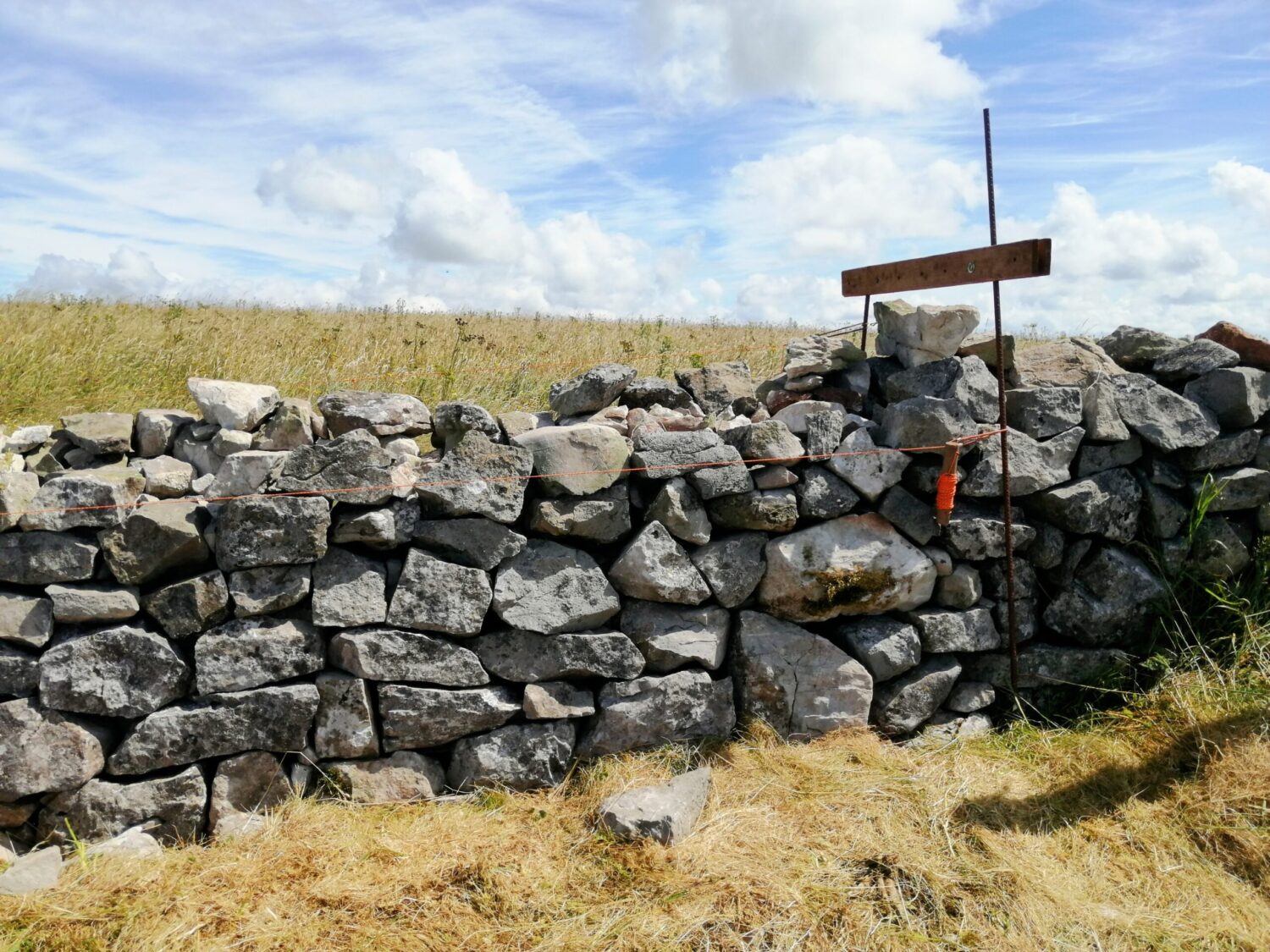
  • Linking valuable habitats within the Mendip Hills by creating ‘habitat corridors’ such as drystone walls or mixed species hedgerows
  • Restoring abandoned dew ponds
  • Improving or establishing appropriate multi-user access paths across the landscape
  • Clearance of blocked swallets, linked in with educational visits to showcase the work required to protect this special feature of the National Landscape
  • Creating valuable wildlife habitat such as reptile hibernacula, or wildflower strips
  • Conserving historic features and working with archaeologists to deliver education site visits for all ages and demographics

For a list of projects that have already been funded by the Farming in Protected Landscapes programme, see our Farming Case Studies page

Payment Rates

The programme works alongside – not in competition with – Defra’s existing and new schemes, adding value where it is most needed. Where activities or projects are the same as an option under Countryside Stewardship or new schemes like the Farming Investment Fund, the payment rates set out under those will be offered.

If a project does not have an equivalent (because it is bespoke or goes beyond the specification – for example the restoration of dew ponds or the purchase of a piece of machinery), then funding offers will be based on the projected costs of an activity (with final payments made against evidenced costs), following receipt of three quotes. For bespoke projects, if an applicant will not make a commercial gain through a project, they could receive up to 100% of the costs. Where an applicant would benefit commercially from a project, they could receive up to 40% of the costs through the programme. Where an applicant would benefit commercially from the project but the primary objective is the delivery of public goods, they could receive up to 80% of the costs, depending on how much commercial benefit the project will give them.

Field system with hedgerows

Eligibility Checklist

The Farming in Protected Landscapes programme is open to all farmers and land managers (including from the private, public, and charity sector) in the Mendip Hills National Landscape or adjacent, where activity on the ground can bring benefit to the Mendip Hills. Other organisations and individuals can apply, as long as they do this in collaboration with a farmer or land manager, or in support of a farmer or group of farmers. Common land is eligible for support through the programme. You can apply as a landowner with sole rights, or as a group of commoners acting together.

Applicants must manage all the land included in the application, and have control of all the activities you’d like to undertake, or you must have written consent from all parties who have this management and control.

You can view the National Landscape boundary by visiting the MAGIC mapping website. Click on ‘designations’, ‘land-based designations’, and then ‘Areas of Outstanding Natural Beauty England.’

Applications must fulfil at least one of the Farming in Protected Landscapes outcomes (outlined above), and deliver on at least one of the objectives of the National Landscape Management Plan. Applications that deliver on multiple outcomes will score more highly at the assessment stage. Full guidance for applicants, including a list of the National Landscape management plan priorities most relevant to the Farming in Protected Landscapes programme, and project examples, are available as supporting documents (see below).

We would expect applications for projects of up to £50,000, but this should not deter applications for projects over this value, particularly for collaborative, or multi-year projects, or projects that deliver exceptional benefits across the programme’s categories. Each project is judged on its own merit on a first come, first serve basis, and nothing precludes multiple applications to this programme.

Farming in Protected Landscapes

Cows looking over a drystone wall

Applying to the Programme

Application Process

(1) Read the guidance documents and check you are eligible for the Farming in Protected Landscapes programme.


(2) Speak to the Farming Engagement Officer. You can receive free, tailored advice from the development of your project through to its completion.


(3) Fill in the application form and attach any supporting documents​ (you will be advised on what they are by the Farming Engagement Officer, but this could include wildlife surveys, photographs, or SSSI consents, and three quotes should be supplied for works to demonstrate cost-reasonableness).


(4) Your application is received and reviewed​:

      – Applications for less than £5,000 are approved by a senior member of the Mendip Hills National Landscape Service​

      – Applications over £5,000 are approved by an independent Local Assessment Panel​ (see below)


(5) If an application is approved, an agreement is drawn up, specifying management obligations and a timeframe for works delivery and payment (see below).

Scoring System

Project applications are scored on four categories.

Project outcome delivery (40%)

How well does the project deliver on the four Farming in Protected Landscapes Objectives and the Mendip Hills National Landscape Management Plan?

Is there an effective evaluation and monitoring approach for the project?

Value for money (20%)

Does the project make efficient use of all available resources?

Does the project demonstrate good cost-reasonableness?

Project legacy (20%)

Does the project demonstrate that its benefits can be maintained after the funding period finishes?

Does the project demonstrate a holistic (whole-farm) approach or does it demonstrate a collaborative approach across multiple landholdings.

How will the project contribute to farm business resilience?

Ability to deliver (20%)

Is there a clear project management plan?

Is there a clear demonstration of the resources and labour needed for the project, and their availability within the timeframe?

Local Assessment Panel

Applications for projects valued over £5000 will be judged by an independent Local Assessment Panel. The Panel comprises of 12 people: 2 representatives from the National Landscape Service and Natural England, 7 representatives from the farming and land management community, 2 wildlife and nature specialists, and 1 public access and engagement specialists. The Farming Engagement Officer offers technical advice on the application, but does not sit on the Local Assessment Panel.

The Local Assessment Panel meets a minimum of every eight weeks. Please ensure your application is in a minimum of two weeks before the Panel meeting you wish it to be reviewed at. The deadline for submissions before the next Panel meeting is 27th August 2026.


Onward agreements and maintenance

If your application is successful, you will need to sign an onward agreement with the Mendip Hills National Landscape Service’s accountable body (Somerset County Council). This will set out the Terms and Conditions of the grant, and will also include the management obligations, any permissions needed/granted for the works to take place, and the approved items plus costs.

Maintenance obligations for projects are as follows:

  • Capital infrastructure assets (including, but not limited to, fences, gates, building restoration), should be maintained for 5 years from the date of completion.
  • Machinery assets (for example a brush harvester for grassland restoration) should be maintained for 5 years from the date of purchase.
  • The requirement to maintain natural, cultural, and access activities (for example, management of grassland, restoration of a limekiln) delivered as part of programme will cease no later than 1 April 2026.

Defra are funding an external evaluator to review the effectiveness of the programme and show what Protected Landscapes bodies can deliver in partnership with farmers and land managers. Successful applicants will need to commit to participating in the programme evaluation; the input expected will be proportionate to the level of funding received

Farming in Protected Landscapes

Stone stile in a drystone wall

Documents

Please check back here regularly, the application form is updated periodically by Defra, and any applicant guidance is subject to regular review to ensure it reflects current circumstances to provide the most support.


Guidance documents for applicants:


Application documents:

Application FormFarming in Protected Landscapes grant programme

Application Form Annex 1Project Cost Breakdown

Application Form Annex 2Map of the Project Site

Application Form Annex 3Not registered for VAT


If you require any of these documents in a different format, including pdf, large print, or a paper copy, please contact our Farming Engagement Officer Nick Donohue on 01761 462338, email FiPL@mendiphills-nl.org.uk or use the contacts page.

A Transparency of Funding document is available on the Farming Case Studies page.

Farming in Protected Landscapes

Priddy Green Hurdle Stack

Find out more

Support throughout this project is available from the Mendip Hills National Landscape Service’s farming engagement officer Nick Donahue.

If you have a question about the Farming in Protected Landscapes Programme in the Mendip Hills National Landscape, please email FiPL@mendiphills-nl.org.uk or call our office on 01761 462338 and leave a message.

For a general overview, you can visit the gov.uk webpage www.gov.uk/guidance/funding-for-farmers-in-protected-landscapes.